
Dry Steam Cleaning for Restaurants and Food and Beverage Services
Snack-bars & Cafeterias, Pubs, Pizzerias & Restaurants, Private clubs, Canteens
Examples of application:
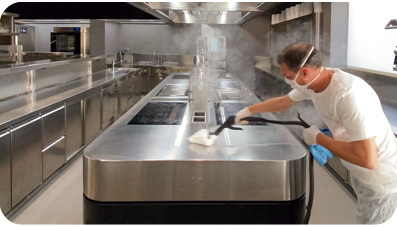
• Cleaning and degreasing of workbenches, walls and ceilings.
• Cleaning and defrosting of cooling fins and coils.
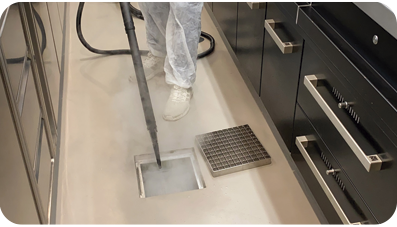
• Elimination of listeria without chemicals in drains and pipes.
• Cleaning and maintenance of ventilation ducts.
• Disposal of food debris.
• Cleaning of dosing systems.
• Cleaning and disinfection of mixing tanks.
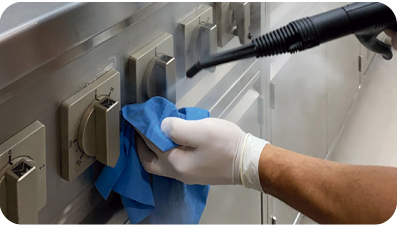
• Removal of grease from control panels and electrical panels.
• Sanitization of filters and grids.
• Thorough cleaning of conveyors, chains, belts, rollers and packages.
• Sanitization of refrigeration systems without removing food.
In any restaurant or establishment where food and beverages are prepared and served, cleaning and disinfection are essential to ensure food safety and maintain a healthy environment for both employees and customers. Dry steam is an innovative, efficient, and sustainable solution with multiple benefits that optimize hygiene and reduce environmental impact.
What is dry steam and how does it differ from wet steam?
Dry steam is water heated to over 338°F, transformed into a gas with minimal moisture, less than 5% liquid water. Unlike wet steam, which contains suspended water droplets and can leave surfaces soaked, dry steam penetrates materials and surfaces without generating residual moisture. This not only speeds up the cleaning process, but also prevents the proliferation of microorganisms associated with moisture, which is especially critical in kitchens and food preparation areas.
Reduced use of chemicals
One of the greatest benefits of dry steam is its ability to disinfect without the need for harsh chemicals. The intense heat acts as a powerful natural microbicidal agent, eliminating bacteria, viruses, fungi, and molds without leaving toxic residues. This is ideal for environments where hygiene is paramount and contact with food is constant, as it prevents cross-contamination and protects the health of those who handle food.
Low water consumption
Dry steam cleaning uses up to 80% less water than traditional methods. By not requiring prolonged rinsing or large volumes of liquid, this system not only saves resources, but also reduces the risk of moisture in facilities, preventing the growth of mold and other microorganisms. In addition, by using tap water, costs associated with specialized chemicals are eliminated.
Thermal shock as a disinfectant
Dry steam generates a thermal shock on surfaces, subjecting microorganisms to a sudden change in temperature that destroys their cell membranes and disrupts biofilms. This effect is especially effective against bacteria, viruses, and fungi, even in hard-to-reach areas such as joints, pores, and corners. The result is thorough and rapid disinfection without the need for additional chemicals.
The cleaning power of high temperature
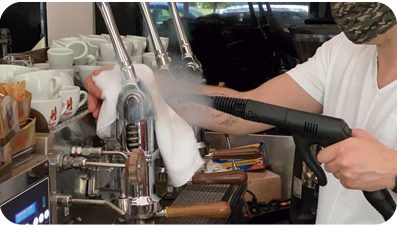
The temperature of dry steam, between 320°F and 374°F, softens and dissolves grease, encrusted dirt, and residues, facilitating their removal without damaging surfaces. This method is ideal for cleaning stoves, range hoods, work tables, and kitchen equipment, where grease and residue accumulation is constant.
Friendly to almost every surface
Dry steam is versatile and safe for most materials: stainless steel, glass, resistant plastics, ceramics, sealed wood, and fabrics. Its low residual moisture makes it suitable even for moisture-sensitive surfaces, such as electrical or electronic equipment, provided that the recommendations for temperature and exposure time are followed.
Ideal for stainless steel, glass, plastics, and fabrics
In the food industry, dry steam is especially useful for disinfecting stainless steel, glass, food-grade plastics, and fabrics such as curtains, uniforms, or upholstery. Its ability to penetrate pores and crevices ensures thorough cleaning, even in areas where traditional methods cannot reach.