
Cleaning solutions for schools and educational spaces using dry steam
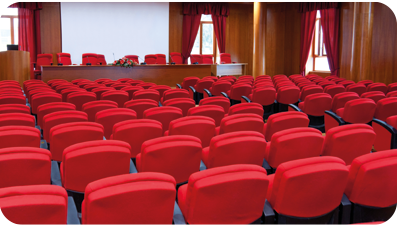
Nurseries and kindergartens, Primary schools and gymnasiums, Universities, Conference centers, Theaters and cinemas
Examples of application:
• Bathroom sanitation.
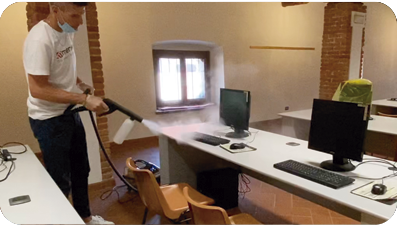
• Cleaning and maintenance of classrooms and offices.
• Cleaning and maintenance of ventilation ducts.
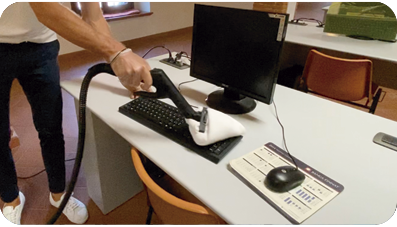
• Sanitation of laminated equipment.
• Disinfection of filters and grilles.
• Removal of stains and odors from carpets, upholstery and seats.
• Elimination of viruses, bacteria and mold.
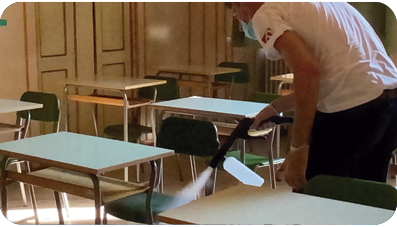
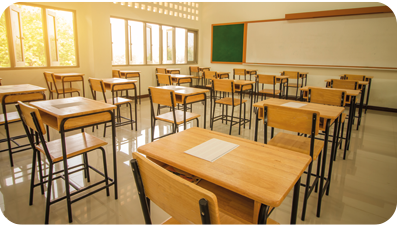
In the educational environment, from kindergartens, schools, universities, auditoriums, etc., hygiene and sanitation of spaces are essential to ensure a safe and supportive learning environment.
The application of saturated dry steam is an innovative and efficient solution for cleaning and disinfecting classrooms, offices, bathrooms, and common areas, offering exceptional results without compromising the health of students, teachers, and administrative staff.
What is dry steam and how does it differ from wet steam?
Saturated dry steam is steam with a minimum moisture content of approximately 5%, which allows the temperature to remain high, around 260-375°F, and its cleaning and disinfecting power to be maximized. Unlike wet steam, which contains more water and can leave residue or moisture on surfaces, dry steam prevents damage to sensitive materials and speeds up the drying process, making it ideal for educational environments where time and efficiency are key.
The use of steam not only optimizes cleaning processes, but also represents a long-term investment. Its efficiency reduces operating costs, minimizes environmental impact, and improves air quality in educational spaces by preventing the dispersion of chemical particles.
Key benefits of dry steam in schools and educational spaces
Reduced use of chemicals
Dry steam eliminates the need for large quantities of detergents, disinfectants, and solvents, reducing their consumption by up to 70%. This not only lowers operating costs, but also protects users from possible allergic reactions or irritations caused by harsh chemicals, creating a healthier environment for everyone.
Low water consumption
Thanks to its advanced technology, cleaning with dry steam consumes up to 96% less water compared to traditional methods. This makes it a sustainable and environmentally friendly option, in line with the ecological responsibility policies promoted by many educational institutions.
Thermal shock: residue-free disinfection
The thermal shock generated by dry steam is capable of effectively eliminating bacteria, viruses, fungi, and mites without leaving toxic residues. This process is especially useful on high-contact surfaces such as tables, chairs, doorknobs, faucets, and toilets, where hygiene is a priority for preventing disease.
High-temperature cleaning power
The high temperature of dry steam, between 266°F and 356°F, breaks down dirt, grease, and organic residues, making them easier to remove without the need for intense scrubbing. This is ideal for areas with constant traffic, such as hallways, cafeterias, and laboratories, where dirt accumulation is greater.
Friendly to almost all surfaces
Dry steam is safe for use on a wide variety of materials, including:
– Stainless steel (in school kitchens or laboratories).
– Glass (windows, mirrors, and table surfaces).
– Plastics (furniture, toys, and technological equipment).
– Fabrics (curtains, upholstery, and carpets).
This makes it a versatile tool for keeping everything from classrooms and offices to bathrooms and common areas spotless, without the risk of damaging materials.